
Developing a Video Marketing Strategy
Today, we are wrapping up our January 2026 series on video and adding it to your business marketing in ‘26. Last week’s post was Key Elements of Successful Videos, and today our topic is Developing a Video Marketing Strategy.

What is a Video Marketing Strategy?
Let me tell you, a video marketing strategy is a plan that uses video content to attract, engage, and convert your audience.
First of all, you have to know what your goal is. What is your goal?
Then, secondly, you have to understand your audience. Who are you targeting? Who is your audience?
Thirdly, you want to create valuable, story-driven content and tailor it to specific platforms. You do not have to be on every video marketing platform or video platform out there. You can choose the ones that I’ve talked about during this series are Facebook.
I’ve talked about YouTube shorts, Instagram reels, and Facebook reels; they go hand in hand, and I’ve also talked about TikTok. Am I going to use all of those video platforms this year in my business to market? No, I’m going to choose the ones that work best for me, but most importantly, where my videos and audience are hanging out, that is the most important thing.
So, you want to focus on your goals, understanding, audience, and creating content for those specific platforms. And then you want to optimize your videos for search engine optimization. As we talked about last week in the key elements, include a strong call to action. So you want the short branded clips with captions, make them high quality, as good a quality as you can. I shared last week about being relatable and being authentic, so they don’t have to be movie quality, of course, but have good lighting and speak right into the camera. Always have good eye contact. Try to have good sound quality.
Have all those things to make a successful video. I’ve gone over these things, but I’m going to talk about some key elements, and we’re going to talk about seven elements or seven steps.
Seven Steps to Successful Videos
Step 1: Define your goals. So, what is it you’re wanting to achieve?
- Do you want traffic?
- Do you want leads?
- Do you want sales?
And you have to know who you’re talking to.
- What is the demographic?
- What are their pain points?
- What is a problem that they have that you can solve or a need that they have that you can meet?
That’s just basic marketing.
Step 2: Choose your platforms.
- YouTube Shorts
- Long Form Content
- Reels
Step 3: Decide where to share.
Are you going to do just YouTube shorts, or are you going to create a lot of long-form content and then piece it out into smaller form content? Are you going to focus on reels, etc? You can go back and pay attention. If you’ve never been on YouTube, this would be hard to do, but you can go back and pay attention to where people are engaging with you in the past.
So, say this past year, you’ve spent a lot of time on Facebook and maybe spent some time over on Instagram, and between those places, where have people engaged with you? For me, I can tell you right off the top of my head, without even going to look at stats and things like that, that I get more engagement on Facebook than I do on Instagram.
Even though they are like sisters, they work together. If I post a story over on Instagram or a reel, for example, my numbers or views are very low, and I don’t usually have anybody comment, share, or do any of those things. But if I post that same video over on Facebook in stories or reels, I get a ton of views and people interact with me.
So where should I be posting? Obviously, over on Facebook. So that’s how you can choose.
Step 4: Plan things out.
- What are you going to post?
- What are you going to share?
- How are you going to share it?
Your goal, you know who your audience is, you know where you’re going to be posting, but what are you going to post about? You have to have content ideas to do that.
And you might tie this in with what you’re doing in your marketing otherwise. So, for example, for me, I’m gonna tie this in with my podcast.
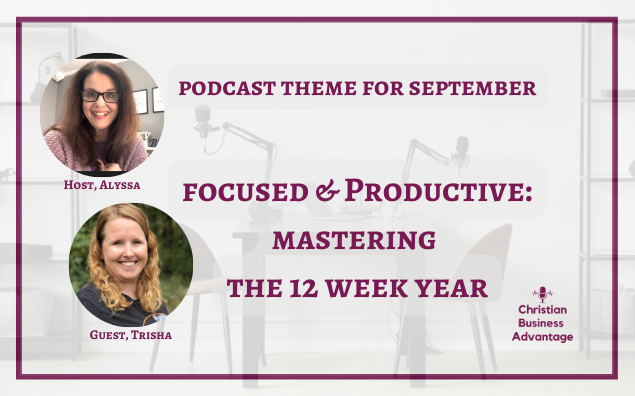
I create a theme every month for my podcast. So you gotta have a plan. I create a theme for my podcast each month, and then that theme is broken down into four different podcasts for the weeks of the month.
And that is then repurposed in numerous ways. So I can use that kind of as my plan, but I can also choose to create some short reels that would promote said podcast, which would promote anything that I’m doing that goes along with the podcast. So I could create a real every single week to promote my podcast.
And those will need to be short, concise, with a clear message. I’ll need to make sure they’re branded to match my brand. I need to make sure that they have captions and include a call to action like we’ve talked about in this series so far.
Step 5: Have a schedule.
So, not just a plan, but you also want to schedule. When are you going to put out a post?
Are you going to post one reel a week? Are you going to post a long form and then break it into other forms? How often are you gonna post? Create a schedule for your videos and tailor that for each channel. So let me give you an example.
I have a client who has a podcast. Her podcast is a video podcast. We then use that to create a short form to promote it, and we have a calendar of when we promote her reels each week. So she has other types of promotional content or just content in general going out. Other days of the week, but then she incorporates that video element as well.
Step 6: Analyze and determine what’s working and what’s not.
Step 7: Start over.
It’s like rinse and repeat. Rinse and repeat. So you define your audience and your goals. You choose where you’re gonna share your platform, and you develop a theme. Each time create a theme, you create a plan, you create your videos, and then you schedule. You create a schedule or to do these things, and then you rinse and repeat, analyze, see what’s going great, and then repeat the process.
So I hope that this series of video elements will add to your business marketing this year, has been helpful to you and you’ve learned some things you might not have already known, and I hope that you’ll come over to the Christian Business Advantage Facebook group and share some of your reels or links to them so we can cheer you on and we can support each other in that way.
Please subscribe to my YouTube channel, where I’ll be sharing the podcast in video format this year. Thanks so much for listening.


STAY CONNECTED
Subscribe to The Christian Business Advantage podcast on your favorite podcast app. New episodes release every Monday. Also, Follow Me on social media:
I would love to have you over in the Facebook group, the Christian Business Advantage. If you’re not a member, hop on over to Facebook and join us!




4 Comments