Calendar Habits That Give Christian Authors, Speakers, and Coaches Their Time Back
Hey, friend! What would you do with an extra hour each week? Maybe you’d finally work on that book. Maybe you’d take a real lunch break. Or maybe you’d sit down with a cup of coffee and not feel behind.
This October on the Christian Business Advantage podcast, we’ve been talking about organizing your digital files and your calendar. We looked at what disorganization costs you, set up a file structure with a naming convention, and built a calendar with time blocking and the Pomodoro method. In the final episode, I shared the habits that keep it all running. Here’s the recap.
Let Your Tools Remind You
A calendar only helps if it speaks up at the right moment. Your phone is almost always with you, so use it for the easy-to-forget things: a call, a deadline, a payment, or a follow-up. Set the reminder for a time when you can actually act on it, not while you’re in the middle of something else. I do this for a monthly refill I tend to forget. The moment I notice I’m running low, I tell my phone to remind me tomorrow at a specific time.
You can also have your calendar email you before an event or email yourself anything that needs attention later. If you work with a team or a VA, send them calendar invitations so everyone’s on the same page.
The goal is simple: you shouldn’t have to remember everything. Let your tools do it so your mind is free for the work God has called you to.
Three Calendar Hacks
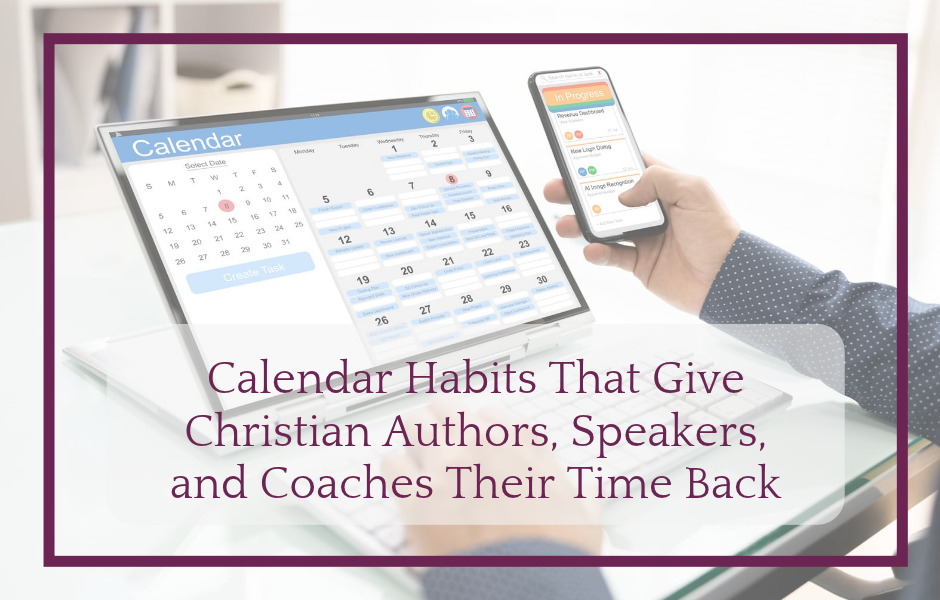
1. Color code by project. Give writing one color, client work another, and family and rest their own. One glance shows you your balance. If everything is one color, that tells you something. If there’s no color for family or rest, that tells you something too. I love this so much that I color code my Google Drive files the same way.
2. Use recurring tasks. Weekly planning, content days, monthly bills, and a monthly review: set it up once, and it shows up every time without you thinking about it.
3. Connect your calendar to a task manager. Your calendar shows when things happen, and your task manager shows what needs to be done, who’s doing it, and by when. Pair something like Google Calendar with Asana and your deadlines show up right on your calendar. (I have an episode on Asana. [Link it here.])
Five Time-Saving Strategies
These are especially helpful if you’re a writer, speaker, or business owner.
- Time block for deep work. Writing and analyzing need long, uninterrupted stretches. Skip the 25-minute Pomodoros and block a couple of hours, then guard them.
- Set writing days. Keep your best hours for your most important work, and save calls and meetings for late afternoon.
- Don’t open email on writing days until you’re done. Email is another person’s priority landing in your lap. Open it first thing and your attention goes to them. Wait until afternoon and your morning belongs to you.
- Keep a yearly record of your work. Once a year, create a document listing your articles, blog posts, guest posts, magazine pieces, and podcast appearances, with titles, descriptions, and links. A year or two from now, you’ll find what you need in seconds instead of searching for it.
- Batch your content. Write several social media posts in one sitting, create all your images in one session, and write your captions together. Switching between types of work drains your time, and batching saves it. (I’ve got episodes on this too. [Link it here.])
Progress, Not Perfection
Looking back over the series: small changes lead to massive improvement; a consistent structure and naming convention keep your files findable; time blocking and the Pomodoro method help you focus; and the right tools remind you and protect your best hours.
You don’t need to do it all at once. Here’s your final assignment: pick one strategy from this post and keep it for 30 days. Maybe it’s color coding your calendar, protecting your writing mornings, or batching your content. Give it a full month before you decide if it works for you, because habits take time to form.
Thank you for walking with me through this series. If it helped you, share it with a friend who needs it. And I’d love to connect with you on Facebook and Instagram.